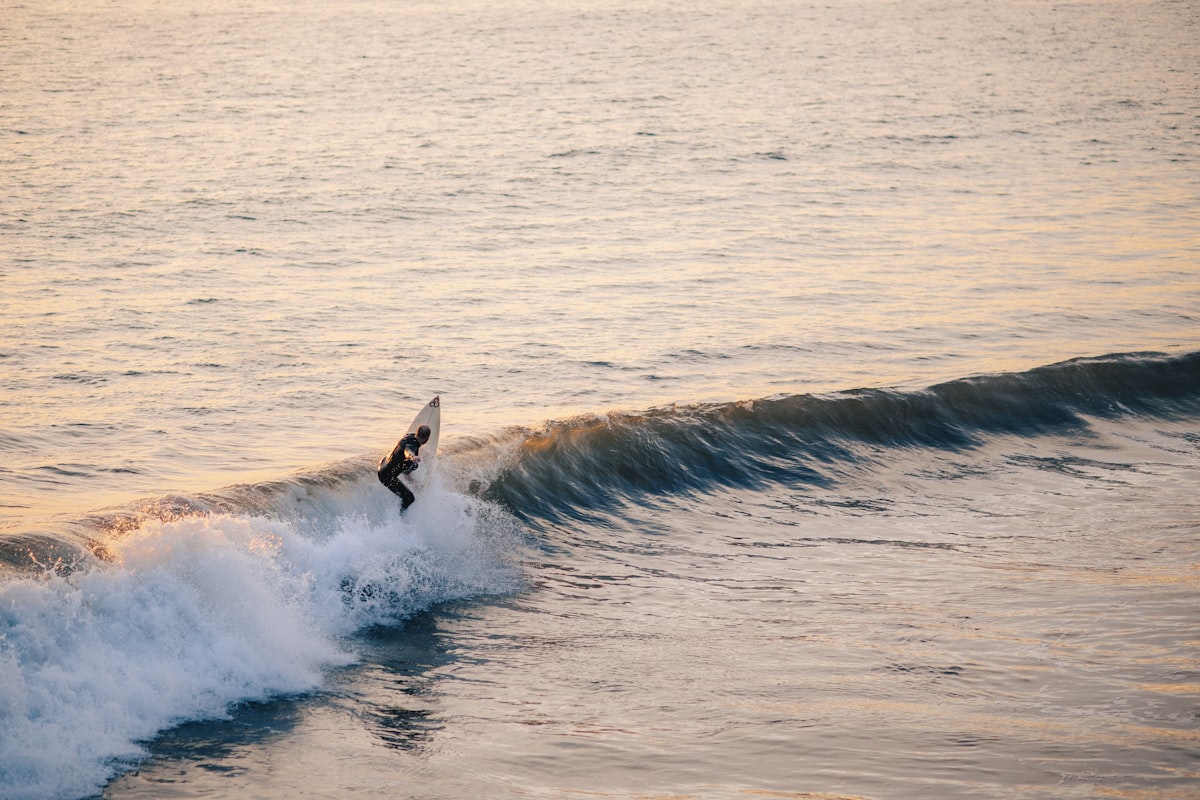
We get asked about surfing in Nosara more than almost anything else. And we get it. This stretch of Costa Rica's Nicoya Peninsula has built its entire identity around the wave. Yoga studios and surf schools share the same dirt roads. Kids grow up on longboards. Retirees who moved here decades ago still paddle out at dawn. Whether you've never stood on a surfboard or you've been chasing swells for twenty years, Nosara has something for you.
This guide covers all of it: the surf spots, seasonal conditions, what to expect from lessons, board rentals, ocean safety, etiquette in the lineup, and how to set up your trip so you can maximize your time in the water. If you're already familiar with our beginner's overview of Playa Guiones, think of this as the expanded, all-levels version.
The Surf Spots
Nosara has a handful of beaches, but when people say they're going surfing in Nosara, they almost always mean one place.
Playa Guiones — The Main Event
Guiones is the reason Nosara is on the surf map. It's a seven-kilometer-long beach break with a sandy bottom, which makes it dramatically safer for beginners than reef breaks or rocky point breaks. Unlike Santa Teresa further south, where exposed rocks are part of the equation, a wipeout at Guiones puts you into sand and warm water. That alone makes it one of the most forgiving surf destinations in Central America.
But Guiones is not just a beginner wave. The beach is long enough to offer multiple peaks that shift with the sand bars, meaning you can find uncrowded sections even on busy days. It picks up swell from virtually every direction — northwest swells in the dry season, south swells in the green season, and everything in between. It works on all tides. The consistency here is genuinely remarkable. We've seen stretches of thirty or forty consecutive days with surfable waves, and that's not an exaggeration.
On a clean day with offshore wind and a solid waist-to-head-high swell, Guiones offers fast, hollow sections that will challenge any intermediate surfer. On smaller days, the mellow whitewater and long rolling walls are ideal for longboarding, learning, or just enjoying a low-stress session. This range is what makes Guiones special — it scales to your ability.
The consistency of Playa Guiones is its single biggest selling point. You don't need to plan your trip around a narrow swell window. You can come any month of the year and find surfable waves.
Playa Pelada
Pelada is Nosara's other main beach, and it's the closest one to Kembar — about a twelve-minute walk. But Pelada is not primarily a surf beach. It's a beautiful, more sheltered cove with rocky outcrops, tide pools, and calmer water that's better suited for swimming, snorkeling, and sunset watching. There are occasional small waves that break near the rocks, but if surfing is your goal, Guiones is where you want to be.
That said, Pelada plays a valuable role in any surf trip. After a hard morning session at Guiones, Pelada is where you come to cool down, explore the tide pools, and have lunch at one of the beachfront restaurants. It's also the sunset gathering spot for the entire community.
Playa Garza
About twenty minutes south of Guiones, Playa Garza is a small fishing village beach that occasionally produces fun surf. It's far less consistent than Guiones and rarely worth the drive if waves are the priority. But if you're exploring the area and conditions line up, it can offer a mellow, uncrowded alternative. It's also a gorgeous beach for a quiet afternoon away from the Guiones scene.
Conditions by Season
One of the most common questions we get is when to visit for the best surf. The honest answer is that Nosara delivers year-round, but the character of the waves changes with the seasons.
Dry Season (December through April)
This is peak tourist season in Nosara, and for good reason. The weather is sunny and warm, rain is rare, and morning offshore winds are reliably clean. Waves tend to be in the waist-to-shoulder-high range, which is ideal for beginners and intermediate surfers working on technique. Northwest and west swells dominate.
The tradeoff is crowds. January through March is the busiest period, and the Guiones lineup can get packed — especially on weekends and around holidays. If you're visiting during peak dry season, the early morning session becomes even more important, both for conditions and for finding space in the water.
Green Season (May through November)
Green season is when Nosara transforms. The jungle becomes impossibly lush, the crowds thin out dramatically, and the waves get bigger. South swells start rolling in from May and can produce head-high-plus surf through November. These swells bring more power, faster sections, and more defined peaks — better for intermediate to advanced surfers looking for a challenge.
Mornings in green season are often sunny and dry, with rain typically arriving in the afternoon. You can absolutely have a fantastic sunrise surf session and be back before the first drop falls. Accommodation prices drop 30 to 50 percent, and you'll share the lineup with a fraction of the people you'd encounter in February. For experienced surfers, the value proposition of green season is hard to beat.
Best Time of Day to Surf
If you take nothing else from this guide, remember this: surf early.
Early Morning (6:00 to 8:00 AM)
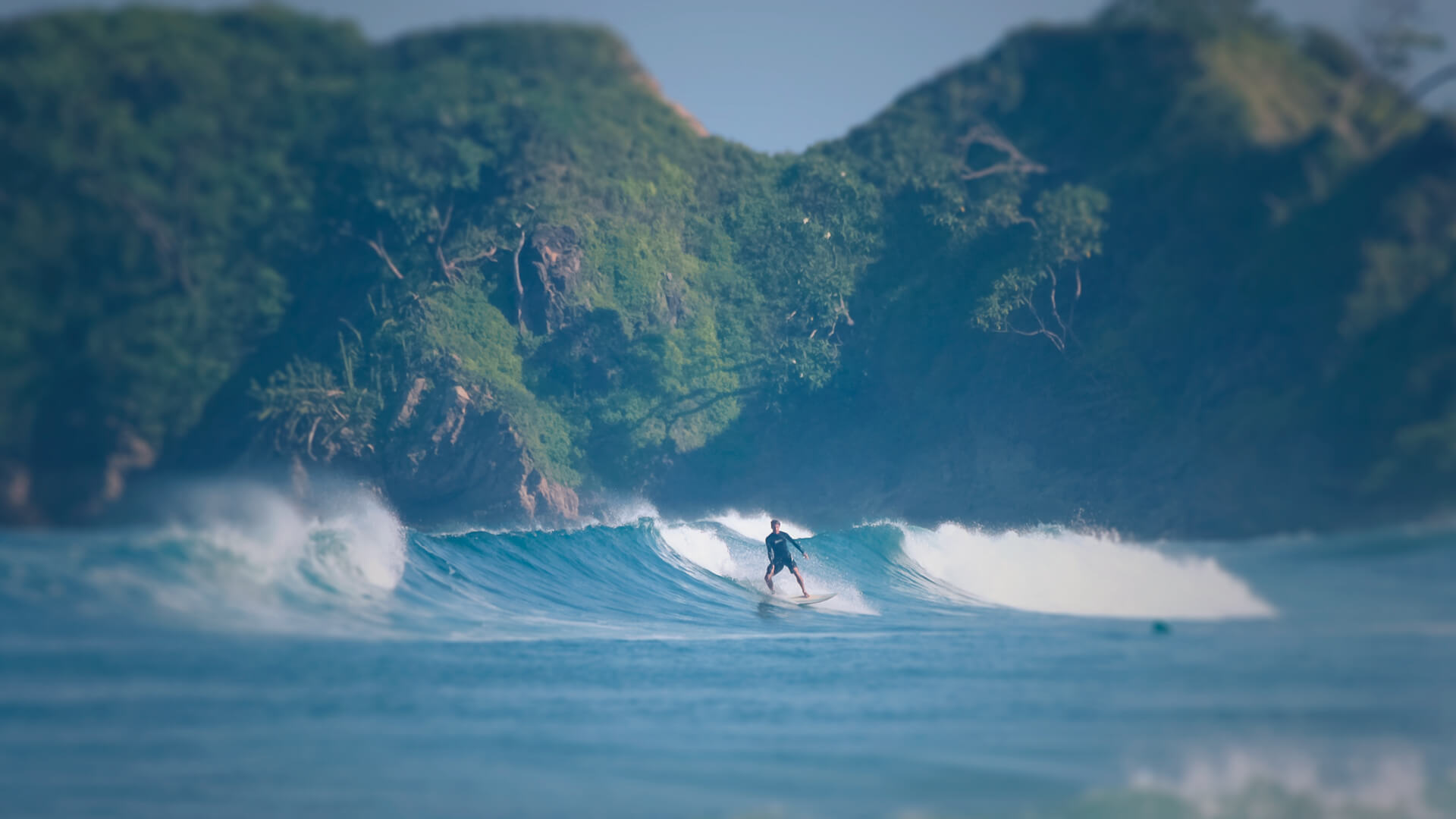
This is the golden window. Winds are calm or lightly offshore (blowing from land toward the ocean), which holds wave faces up and creates clean, glassy conditions. The water is often glass-smooth at dawn, and it stays that way for a couple of hours. The lineup is also at its least crowded. Serious surfers in Nosara are in the water by 6:00 AM, and they'll tell you the first ninety minutes of the day are worth more than the rest of the day combined.
Mid-Morning to Early Afternoon
By 9:00 or 10:00 AM, onshore winds typically start picking up, chopping up the wave faces and making conditions messier. The surf is still rideable — and this is when most surf lessons run — but it's noticeably less clean than the dawn session. Intermediate and advanced surfers often use this window for a second session if the swell is good enough to overcome the wind texture.
Late Afternoon (4:00 to 6:00 PM)
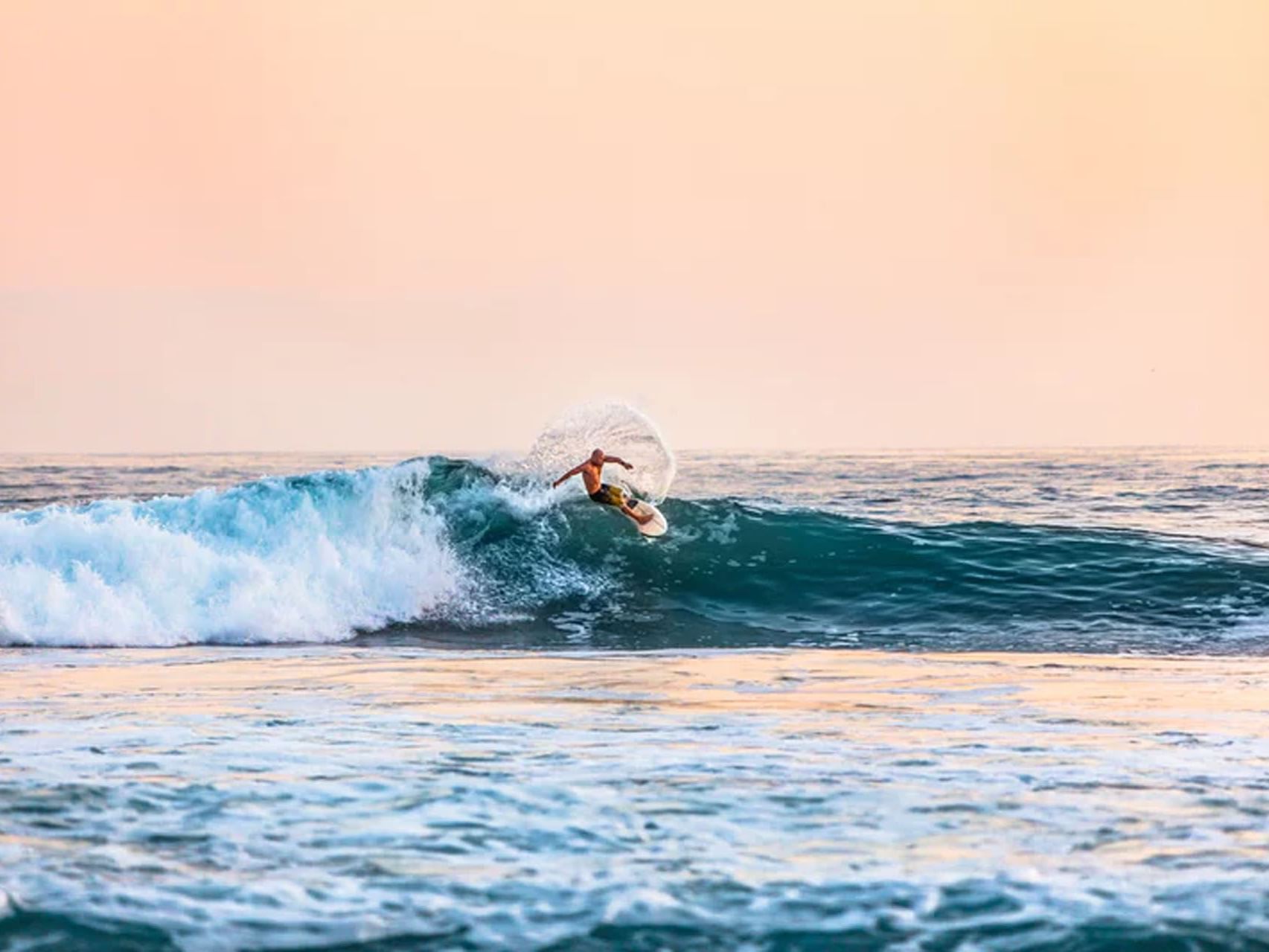
Winds sometimes die down in the late afternoon, and you can get a second clean window before sunset. This is less reliable than the morning, but when it happens, the combination of calmer water and golden light makes for an incredible session. It's particularly common in dry season. Just keep an eye on the clock — you don't want to be in the water after dark.
A Note on Tides
Tide matters at Guiones. Mid-tide is generally the sweet spot for the best-shaped waves. Low tide can get shallow, making wipeouts harder on the body and causing waves to break more abruptly. High tide can make waves mushy and weak, losing their shape. A rising mid-tide — moving from low toward high — is the magic combination that most experienced local surfers chase. Surf schools time their lessons around the tides, so if you're taking a lesson, your instructor has already factored this in.
The Beginner's Guide to Learning in Nosara
If you've never surfed before, Nosara is genuinely one of the best places in the world to start. We've watched hundreds of guests come back from their first lesson grinning from ear to ear, and we've seen plenty of people fall in love with surfing here and completely reshape their relationship with the ocean.
What to Expect in Your First Lesson
Every surf school follows a similar format. You'll start on the beach with a safety briefing covering ocean awareness, rip currents, and how to fall safely. Then your instructor will teach you the pop-up — the motion of going from lying flat on the board to standing — and you'll practice it on the sand until the muscle memory starts to click. After ten to twenty minutes of dry land practice, you'll head into the water.
In the water, your instructor will position you in the whitewater (already-broken waves) and physically push you into waves for your first few attempts. The goal for day one is simple: stand up and ride the whitewater toward shore. Most people accomplish this within the first session. It won't be graceful, and you'll fall a lot, but the feeling of standing on a moving wave for the first time is unlike anything else.
Lesson Costs and Structure
Group surf lessons in Nosara typically cost $55 to $85 per session, with sessions running 1.5 to 2 hours. Private lessons are slightly more. Most schools include a surfboard and rash guard in the price. Instructor-to-student ratios for group lessons are usually 1:3 or 1:4, which means you get plenty of individual attention.
Tip: If you're serious about learning, book a multi-day package of three to five consecutive sessions. The muscle memory builds exponentially when you surf every day, and most schools offer a discount on packages. By day five, most people are catching their own waves without assistance.
The Multi-Day Progression
Here's a rough timeline of what we typically see from guests who commit to several days of surfing:
- Day 1: Pop-up practice on the beach, then standing up in the whitewater with your instructor pushing you into waves. You'll be exhausted and sore. You'll also be hooked.
- Day 2: Refining the pop-up, catching more waves, starting to steer left and right. Muscle soreness peaks.
- Day 3: Catching your own waves without the instructor pushing you. Learning to read when a wave is coming and how to position yourself. A major confidence breakthrough for most people.
- Days 5 to 7: Riding down the line (along the face of the wave rather than straight toward shore), beginning to feel the wave's energy, and developing your own style. Some people move from the whitewater into the unbroken waves.
The sandy bottom at Guiones makes this entire progression safer than it would be at most other surf destinations. Wipeouts are routine and generally painless — you fall into warm, waist-deep sand-bottom water.
Board Rental
If you want to practice on your own between lessons, or you're an experienced surfer who brought skills but not a board, rental shops are easy to find in the Guiones neighborhood.
Expect to pay $10 to $20 per day, with discounts for multi-day or weekly rentals. Most shops offer a range of boards:
- Soft-top longboards (8 to 9 feet): The go-to for beginners. Stable, buoyant, forgiving, and soft enough that they won't hurt much if the board hits you.
- Hard-top longboards (9 to 10 feet): For intermediate surfers who want more performance from a longer board.
- Funboards and fish (6 to 7.5 feet): A good middle ground for surfers transitioning from longboards to smaller equipment.
- Shortboards (5.5 to 6.5 feet): For experienced surfers who know what they're doing. Not beginner-friendly.
We recommend Juan Surfo's Surf Shop — a local Tico-owned shop on the road to Playa Guiones with a great selection for all levels, plus gear, wax, and solid local knowledge about where to paddle out.
Surf Etiquette: The Rules Everyone Should Know
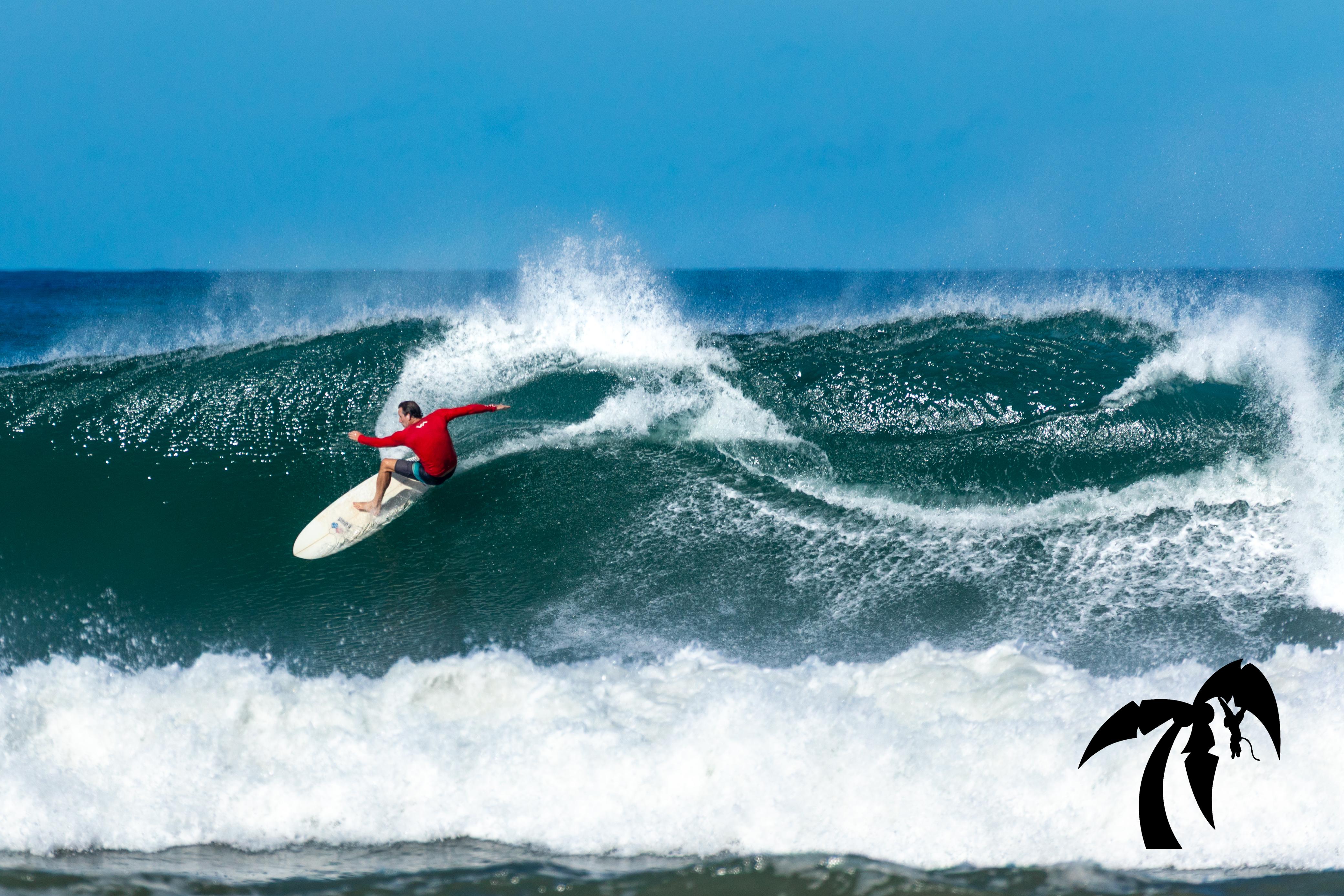
Every surf break has an unwritten code of conduct. Following it keeps everyone safe and keeps the vibe in the water positive. Nosara's lineup is generally friendly, but it's also a real surf community — people notice when etiquette is ignored.
Don't Drop In
The surfer closest to the breaking part of the wave (the peak) has priority. If someone is already riding a wave and you take off in front of them, that's called dropping in, and it's the single most common violation in surfing. Look both ways before committing to a wave, just like crossing a street.
Don't Snake
Snaking is when you paddle around another surfer to position yourself closer to the peak and steal priority. It's considered even worse than dropping in because it's deliberate. Wait your turn. The lineup operates on an informal rotation — everyone gets waves.
Beginners: Stay in the Whitewater
If you're still learning, stay in the already-broken waves close to shore. Do not paddle out into the main lineup where experienced surfers are catching unbroken waves. You're likely to get in someone's way, and you're putting yourself in a situation that's above your skill level. There is absolutely no shame in riding whitewater — that's how every surfer on earth started.
Paddle Around, Not Through
When paddling back out after catching a wave, go around the breaking zone rather than straight through it. Paddling through the impact zone puts you directly in the path of surfers riding waves.
Respect the Crowd
Peak season at Guiones — January through March — brings the biggest crowds. The lineup can get congested, especially at the most popular peaks. Be patient. Be respectful. Wait your turn, give waves to others, and keep a positive attitude. A smile and a friendly nod go a long way in any lineup.
Ocean Safety
The ocean deserves respect, no matter how warm and inviting it looks. Guiones is a relatively safe beach, but it's still open ocean, and conditions can change.
Rip Currents
Rip currents are channels of water flowing away from shore, and they exist at every beach break. At Guiones, rips typically form in the deeper channels between sand bars. If you feel yourself being pulled out, don't panic and don't fight it by swimming directly toward shore. Instead, swim parallel to the beach until you're out of the current, then swim in. If you're too tired to swim, float and raise an arm to signal for help. Your surf instructor will point out rip current locations before your lesson.
Never Surf Alone
This applies to all ability levels. Always surf where others can see you, and let someone on the beach know where you'll be in the water. If something goes wrong — cramp, impact with your board, a strong current — you need someone who can help or call for help.
Respect Your Ability Level
If the waves look bigger or more powerful than what you're comfortable with, don't go out. There's no shame in sitting on the beach and watching. Green season swells can produce overhead surf that is genuinely dangerous for inexperienced swimmers and surfers. Stick to conditions that match your skill set.
Sand Flies After Sunset
This isn't a surf safety issue per se, but it catches a lot of visitors off guard. Sand flies (locally called "purrujas") come out near dusk, and their bites are incredibly itchy. If you're watching the sunset on the beach, cover your legs and feet or apply insect repellent. A long pair of pants or a sarong does the job.
Protect Yourself from the Sun
The tropical sun at this latitude is intense, and you're exposed for hours while surfing. Apply reef-safe, zinc-based sunscreen generously before your session, wear a rash guard, and reapply after you get out of the water. Sunburn is by far the most common health issue we see among visiting surfers.
Where to Stay for Surfers
Location matters for surf trips more than most vacations, because you want to be in the water at 6:00 AM and you don't want a long commute to get there.
The Guiones neighborhood puts you within walking distance or a short drive of the main break. This is where the surf shops, cafes, restaurants, and yoga studios are clustered. It's the heart of the Nosara surf scene.
Playa Pelada is a short drive from Guiones — about five to eight minutes — and offers a quieter, more residential atmosphere while still keeping you close to the action. Kembar Nosara is located in the Pelada area, which means you're a quick drive to the Guiones lineup in the morning and a short walk to the calmer waters of Pelada in the afternoon.
If you're traveling with a group — a family, a couple of friends, or a multi-couple trip — a private villa like Kembar gives you space to spread out, a pool for post-surf recovery, a full kitchen for fueling up before dawn sessions, and outdoor showers for rinsing the salt and sand off your gear. We've hosted dozens of dedicated surf trips, and the feedback is always the same: having a home base makes the whole trip better.
Your Surf Trip Gear Checklist
Nosara is warm and casual, so you don't need much. But a few items will make your surf experience significantly more comfortable.
- Reef-safe sunscreen (zinc-based, SPF 50+): Nosara takes ocean conservation seriously, and so should you. Chemical sunscreens damage coral and marine life. Pack a mineral-based formula.
- Rash guard or surf shirt: Sun protection and rash prevention in one. A long-sleeve rash guard is the single most useful piece of surf gear you'll bring.
- Board shorts or bikini: No wetsuit needed. Water temperature stays between 78 and 84 degrees Fahrenheit year-round.
- Tropical surf wax: Available at any surf shop in Guiones, but if you want to bring your own, make sure it's tropical formula (not cold water wax, which will melt immediately).
- Ear plugs: If you're prone to surfer's ear (exostosis), silicone ear plugs are worth the small investment. Repeated exposure to wind and water can cause bony growths in the ear canal over time.
- Waterproof phone pouch: For photos from the beach or keeping your phone safe during beach time.
- Insect repellent: For those post-surf sunset sessions on the sand.
Beyond the Surf
Most surfers who visit Nosara quickly discover that the town's appeal goes far beyond the waves. There's a surprisingly excellent dining scene for a town this size, with everything from beachfront ceviche to farm-to-table restaurants tucked into the jungle. The yoga scene is world-class, and a restorative class after a morning session is one of the best combinations we know. If you want to explore beyond the beach, there's plenty to fill a full itinerary — horseback riding, wildlife sanctuaries, zip lining, and day trips to hidden beaches like Playa Barrigona.
For getting here, we've put together a complete guide on getting to Nosara, including airport options and whether to rent a car or fly in on a domestic airline. And if you're weighing Nosara against another destination, our Nosara vs. Tamarindo comparison breaks down the key differences.
Frequently Asked Questions
Is Nosara good for beginner surfers?
It's one of the best places in the world to learn. Playa Guiones has a sandy bottom, warm water, consistent waves, and a wide beach with gentle whitewater that's ideal for first-timers. Multiple surf schools run daily lessons for all ages and skill levels.
How much do surf lessons cost in Nosara?
Group lessons typically cost $55 to $85 per session, lasting about 1.5 to 2 hours. Board and rash guard are usually included. Private lessons cost more but offer faster progression. Multi-day packages bring the per-session cost down.
What is the best time of year to surf in Nosara?
Nosara has surfable waves year-round — that's its greatest advantage. Dry season (December through April) brings cleaner, smaller waves and sunny weather. Green season (May through November) delivers bigger south swells, fewer crowds, and lower prices. Your ideal timing depends on your skill level and what kind of experience you're looking for.
Can you rent surfboards in Nosara?
Yes. Board rental shops in the Guiones area rent everything from soft-top longboards for beginners ($10 to $15 per day) to performance shortboards for experienced surfers ($15 to $20 per day). Multi-day and weekly discounts are common.
Plan Your Nosara Surf Trip
Kembar Nosara is a nine-minute drive from Playa Guiones and a short walk from Playa Pelada. After a morning in the waves, come back to a private pool surrounded by jungle, outdoor showers for rinsing off, and a full kitchen for post-surf meals. The property sleeps up to 12 across two mirrored homes, making it ideal for families, friend groups, or multi-couple surf trips.
Check availability and rates on our booking page, or reach out on WhatsApp with any questions about planning your trip. We've helped hundreds of guests plan their Nosara surf experience, and we're happy to help with yours.