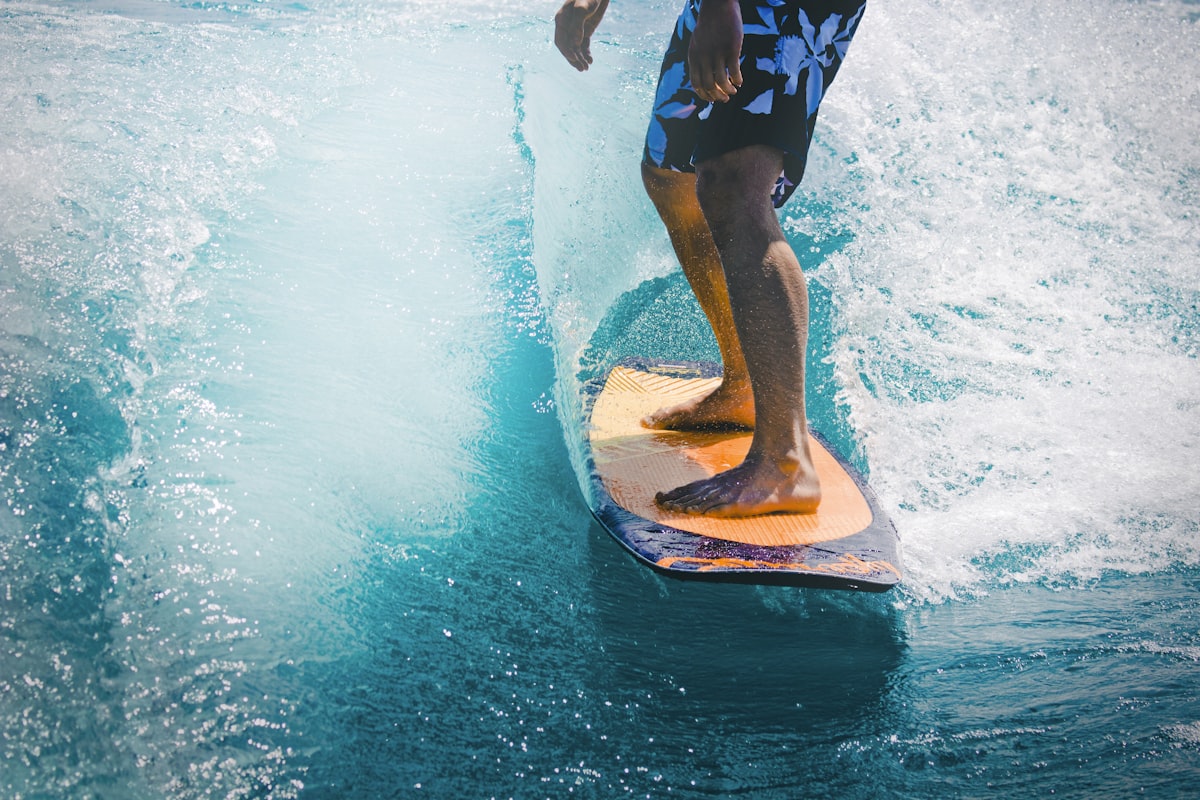
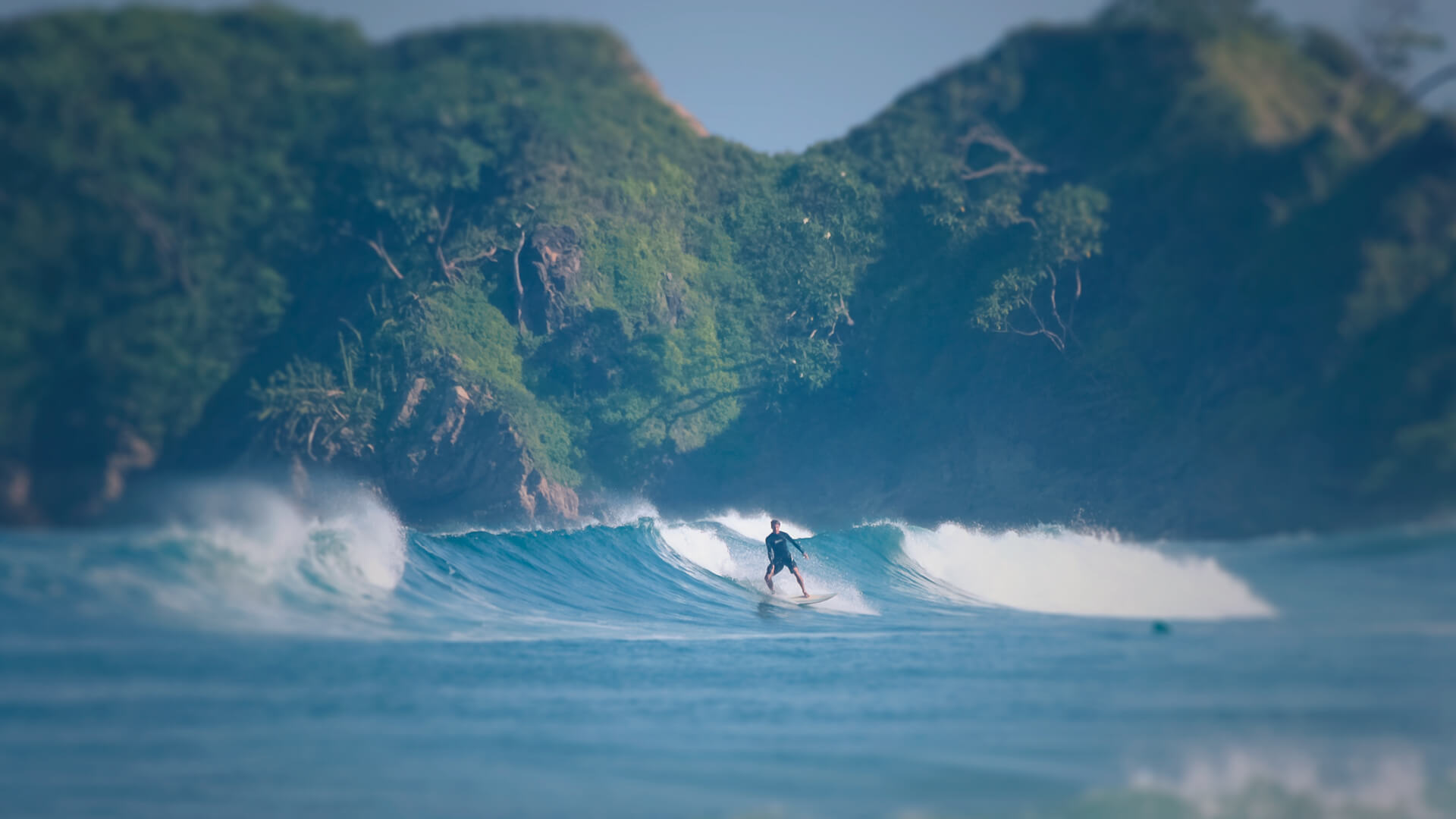
There's a reason surf schools line the road to Playa Guiones in Nosara, Costa Rica. This seven-kilometer stretch of white sand, warm water, and consistent waves has turned more first-timers into surfers than almost any beach in Central America. Whether you've never touched a surfboard or you're looking to get back in the water after years away, Guiones is the place to do it.
Why Guiones Is Perfect for Learning
Not all surf breaks are created equal, and Guiones has a combination of features that make it unusually forgiving for beginners.
Sandy bottom everywhere. Guiones is a beach break — the waves break over sand, not rock or coral reef. When you fall (and you will fall), you land in sand and warm water. That alone removes a major source of anxiety for new surfers.
Consistent, rideable waves year-round. Guiones picks up swell from both the north (November through April) and the south (May through November), which means there are surfable waves on the majority of days throughout the year. Beginners won't be stuck on the beach waiting for conditions.
Warm water, no wetsuit. The Pacific here stays between 78 and 84 degrees Fahrenheit year-round. You'll surf in boardshorts or a bikini, with maybe a rash guard for sun protection. Not having to wrestle into a wetsuit makes the learning process much more comfortable.
Wide, gently sloping beach. The gradual slope means whitewater (already-broken waves) rolls toward shore over a long distance, giving beginners plenty of room to practice popping up before tackling unbroken waves further out.
The beach is long enough — about 7 kilometers — that even on busy days, you can spread out and find uncrowded peaks. That's rare for a world-class surf break.
What to Expect from a Surf Lesson
A typical beginner surf lesson in Nosara runs about two hours and follows a consistent format across most schools:
- Beach instruction (10–20 minutes): Your instructor will walk you through ocean safety, how to read waves, proper board positioning, paddling technique, and the pop-up motion. You'll practice getting to your feet on the sand before hitting the water.
- In-water time (60–90 minutes): The instructor goes in with you, helping position you for waves, pushing you into them, and giving real-time feedback. Most beginners are standing and riding whitewater by the end of the first session.
Group lessons typically have a 1:3 or 1:4 instructor-to-student ratio. Private lessons are 1:1 or 1:2 and offer more personalized coaching. Board and rash guard are almost always included in the lesson price.
Tip: If you're serious about learning, book a multi-day package — three to five consecutive sessions. The muscle memory builds quickly when you surf every day, and most schools offer a discount on packages.
Best Time of Day to Surf
This matters more than most beginners realize. Conditions at Guiones can change dramatically between morning and afternoon.
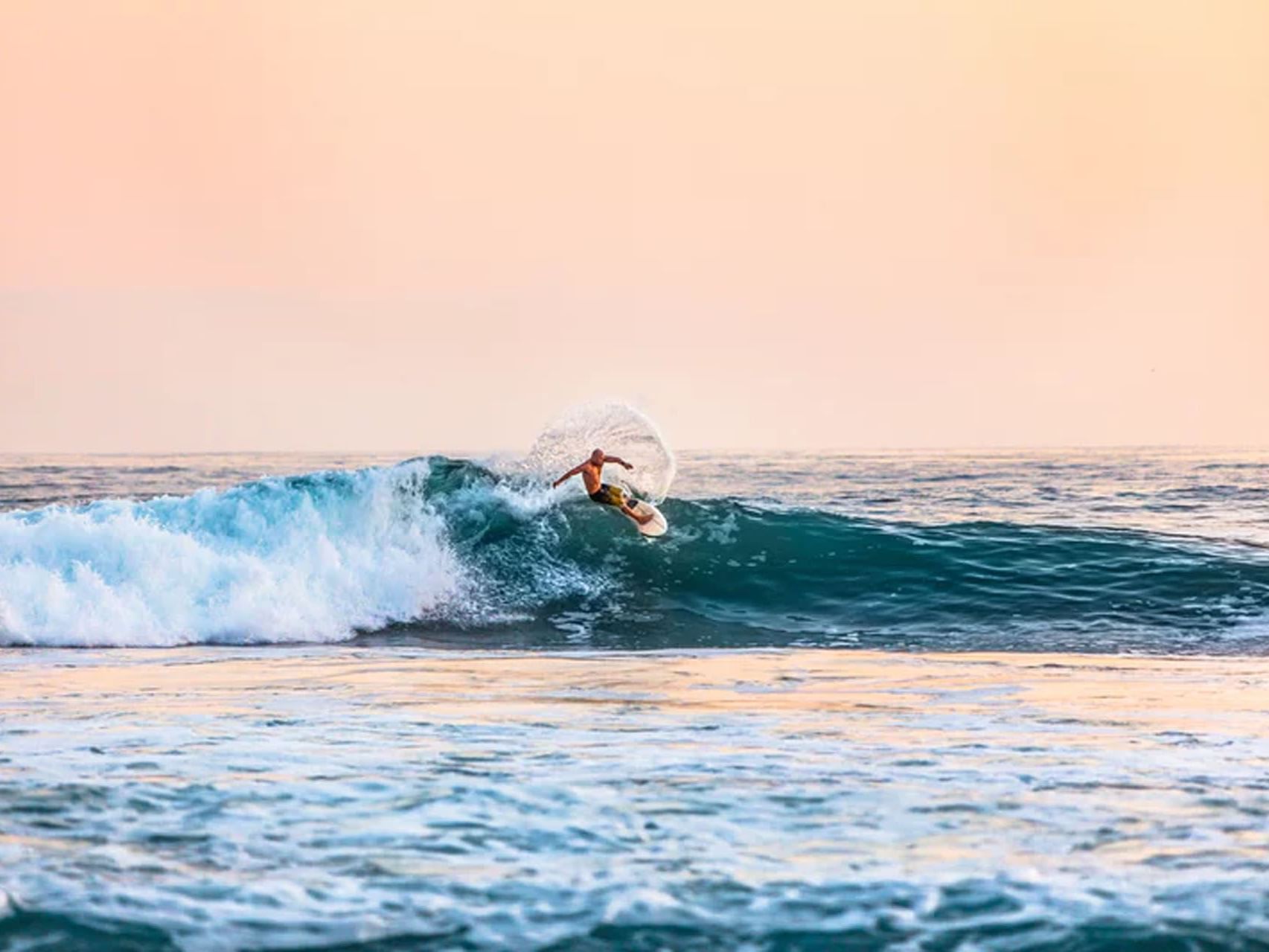
Early morning (6:30–9:00 AM) is the golden window. Winds are typically calm or light offshore (blowing from land toward sea), which holds wave faces up and creates clean, glassy conditions. The water is also less crowded. If you take only one piece of advice from this article, let it be this: book the early session.
Late morning to early afternoon often brings onshore winds that chop up the surface and make waves messier. It's still surfable, but noticeably less clean.
Late afternoon (4:00–6:00 PM) can offer a second window as winds sometimes die down before sunset. This is particularly true in the dry season (December through April).
A note on tides
Guiones works on all tides, but mid to high tide tends to be most beginner-friendly. At low tide, waves can become more powerful and break in shallower water. A rising tide — from mid toward high — is often cited as the sweet spot. Your surf school will time your lesson with the tides in mind.
When to Visit for the Best Conditions
Dry season (December–April) is the most popular time. Offshore morning winds are reliable, skies are sunny, and waves are typically in the three-to-five-foot range — perfect for beginners and intermediates. This is also peak tourist season, so book accommodations and lessons in advance.
Green season (May–November) brings south swells that can produce bigger, more powerful surf. But mornings often start dry and sunny, and there are still plenty of beginner-friendly days, especially at higher tides. The upside? Thinner crowds, lower prices, and lush, green jungle everywhere you look.
Surf Etiquette: The Unwritten Rules
Surfing has a code of conduct that every beginner should understand before entering the water:
- Right of way: The surfer closest to the breaking part of the wave has priority. Never drop in on someone already riding.
- Stay in the whitewater: As a beginner, practice in the broken waves close to shore. The lineup — where experienced surfers catch unbroken waves — is not the place to learn.
- Hold onto your board: A loose longboard is a hazard to everyone around you. When you fall, try to control your board rather than abandoning it.
- Paddle around, not through: When paddling back out, go around the breaking zone — not through the area where people are riding waves.
- Respect locals: Nosara has a welcoming but tight-knit surf community. A friendly attitude, humility, and awareness go a long way.
Taking a lesson handles most of this naturally — your instructor will keep you in the right zone and teach these basics from day one.
Staying Safe in the Water
Sun protection is essential. The tropical sun at this latitude is intense. Apply mineral sunscreen (SPF 50+) before your session, wear a rash guard, and reapply after surfing. Sunburn is the most common issue for visiting surfers.
Rip currents can occur at any beach break. If you feel yourself being pulled out, swim parallel to shore until the current releases, then swim in. Your instructor will point out any rip currents before you enter the water.
Protect your head. When you fall off a longboard, cover your head with your arms as you come up. The board is the most common source of beginner injuries.
Stay hydrated. Surfing in tropical heat is more physically demanding than it feels. Drink plenty of water before and after your session.
Board Rentals and Equipment
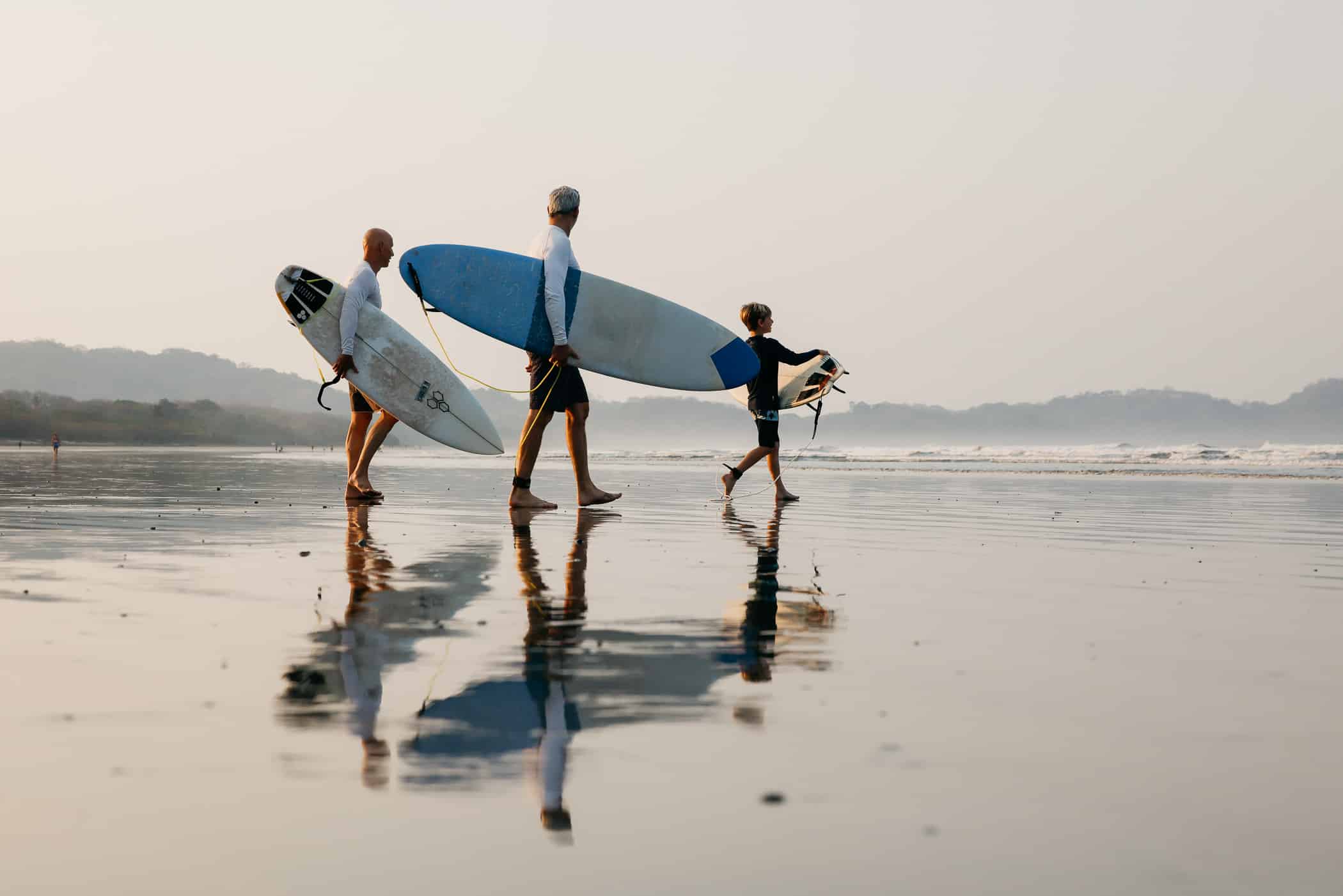
If you want to practice on your own after a lesson — or you already know what you're doing — board rental shops are clustered near the main beach access points. Beginners should stick with a soft-top longboard (eight to nine feet) — they're more stable, more buoyant, and safer when you inevitably get hit by your own board. More experienced surfers will find shortboards, fish, and funboards available too. Rental rates typically run $15–30 per day, with discounts for multi-day rentals.
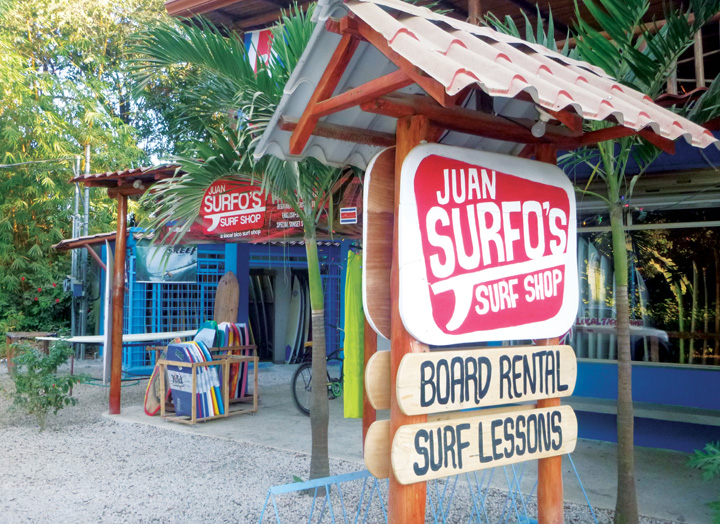
We recommend Juan Surfo's Surf Shop — a local Tico-owned shop right on the road to Playa Guiones. They've got a great selection of rental boards for all levels, plus surf lessons, gear, and clothing. It's the kind of place where the owner knows every break in town and will point you in the right direction.
What the Beach Is Like
Guiones is not a resort beach. There are no high-rises visible from the sand, no DJ-soundtracked pool clubs, no vendors aggressively selling jet ski rides. What you get instead is seven kilometers of wide, white sand backed by tropical vegetation, with the Nosara Biological Reserve as a neighbor. The beach earned Costa Rica's Blue Flag certification for its clean water and environmental stewardship.
The vibe is laid-back and wellness-oriented. You'll see yoga practitioners stretching on the sand, families building sandcastles, and surfers of all ages bobbing in the lineup. Almost everyone gathers on the beach to watch the sunset — Guiones faces due west, and the sunsets are reliably spectacular.
After the Surf
Nosara's post-surf ritual is half the experience. Walk up from the beach to any of the restaurants and cafes along the Guiones strip for an açaí bowl, fresh ceviche, or a cold Imperial. The town has a surprisingly excellent dining scene for its size, with a strong emphasis on organic, farm-to-table food. And if your muscles are sore, Nosara is also one of Central America's top yoga destinations — a restorative class after a morning surf session is a near-perfect combination.
Your Home Base in Nosara
Kembar Nosara is a nine-minute drive from Playa Guiones and a short walk from Playa Pelada. After a morning in the waves, come back to a private pool surrounded by jungle, outdoor showers for rinsing off, and a full kitchen for post-surf meals. The property sleeps up to 12, so it works for families, friend groups, or multi-couple surf trips.
Check availability and rates on our booking page, or reach out on WhatsApp with any questions about planning your Nosara surf trip.